Serial Casting Technique
Emily gets serial casting on both legs few days after she returns home from St Louis. This is done to stretch the.
What is Serial Casting Serial casting is a treatment technique used by Manchester Neuro Physio to maintain or increase muscle length and joint range of movement in adults and children. It involves making a series of lightweight casts of the arm or leg which provides a prolonged stretch of the muscles, ligaments and joint. The cast is worn at home and after a week, another cast is made in a position that increases the angle of stretch and then another until the target range of movement is achieved. The overall casting procedure can take between 4 and 8 weeks. Your physiotherapist will measure your joint range of movement before the first cast is made and then regularly between casts in order to keep an objective measure the individual's progress and improvement.
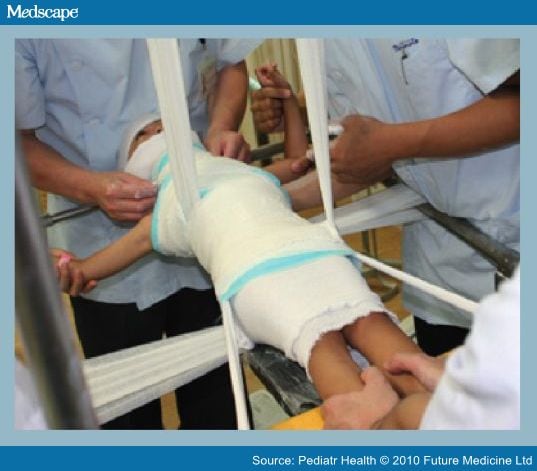
Serial casting can be very useful to help bring your toes up towards you to achieve a functional foot position for standing. It can also be used to straighten elbows, wrists and hands.
It is a pain free treatment technique used alongside muscle mobilisations and soft tissue stretches. It works especially well after botulinum toxin (botox) injections which paralyse and relax the muscles so that they can be stretched to achieve greater range of movement and function. To book an appointment or for more information regarding Serial Casting service please call 0161 883 0066, or alternatively request a. • • • To book an assessment or for more information please email call.
Serial casting is a procedure that helps children and adults improve their range of movement. The procedure is the application of a fiberglass cast with padding to hold a part of the body in a position that will stretch a tight muscle. The cast is applied weekly and will stay on for 5-10 days maintaining the muscle in a stretched position. Sequential casts are done for up to three to six weeks to progressively stretch the joint and increase range of motion. Who benefits from serial casting?
The serial casting program at Kennedy Krieger Institute can be done for any patient with muscle tightness and limited range of motion, but the most prevalent diagnoses are: • Cerebral palsy • Spina bifida • Brain injury • Spinal cord injury • Congenital abnormalities • Muscular dystrophy • Idiopathic toe walking • Peripheral neuropathy • Brachial plexus • Arthrogryposis • Syndactyly What are the goals of serial casting? • Serial casting is a non-invasive approach to reduce the muscle tightness and limited range of motion of a joint to improve the patient's function. • Serial casting helps correct joint alignment so that the patient can be given the appropriate orthotic device or treatment.
• Serial casting may help prevent deformity by allowing the patient to perform functional activities without restriction. • Serial casting can be a treatment choice to help plan possible upper extremity surgery or to postpone surgery by gaining range. Panasonic Network Camera Recorder License Renewal here. • Serial casting may assist with goals of maintaining proper skin integrity, decrease pain, and to assist with ease of care for activities of daily living. • Serial casting is often used in conjunction with Botox intervention to gain muscle length and reduce tone. What happens during a serial casting session? Patient is evaluated by a physical or occupational therapist prior to the procedure. Finger Sensing Pad Driver Windows 7 on this page.
Trained therapists will apply the cast with proper padding to prevent skin irritation. The extremity will be casted in proper alignment at one or more targeted joints in the maximal available range of motion. Instruction about care of the cast and precautions will be reviewed with the family/caregiver and patient. How long will I need to come for cast changes? Casts will be changed on a weekly basis until the patient's range of movement progresses to their most functional level.
Each patient responds differently to casting; therefore, the number of casts will be determined by the therapist. Generally, casting can last anywhere from three to six weeks. What happens after the casting is finished? The physician and the therapist determine what the patient's needs are regarding orthotics after casting. Orthotics are generally applied after the cast procedure is complete to help maintain the patient's range of motion.
How does serial casting affect the patient and family? The casting procedure can take anywhere from one to three hours, depending on the response of the patient and the number and/or type of joint being casted. The patient is able to participate in school and other normal activities while the cast is on.
The biggest challenge is keeping the cast dry, especially during the bathing process.